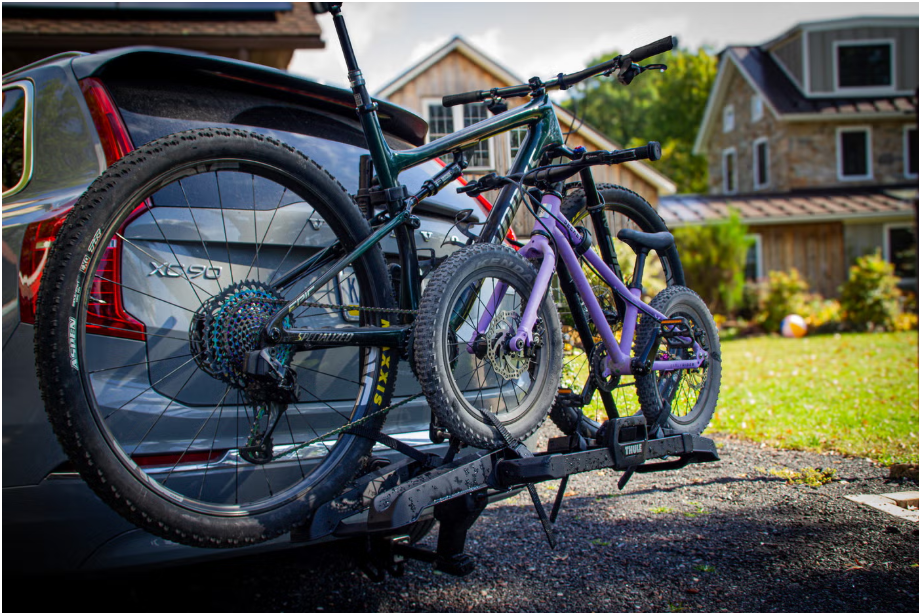
In daily commutes, a reliable bike rack is crucial for getting your wheels to your destination and returning them safely. Hitch bike racks, mounted via the vehicle’s trailer hitch, offer stability, convenience, and relatively low wind resistance. This article outlines the design highlights, selection considerations, and practical usage precautions of mainstream models to help readers make informed choices.
Structure and Core Considerations
- Installation and Compatibility
- The rack connects via the trailer hitch, with both 1¼-inch and 2-inch universal sizes available. Most SUVs and pickup trucks use the 2-inch connector, but the specific vehicle model and connector depth will affect the need for an extension bar and the necessity of an anti-rattle clamp. Compatibility depends not only on the vehicle’s connector size but also on the rack’s weight capacity and wheel diameter compatibility. In practice, if the rear of the chassis is close to the tailgate, an extension bar may be a necessary spare.
- Load Capacity and Weight
- Different models have strict weight limits on a single wheel, and are mostly designed for carrying two vehicles side-by-side. Some high-end products can accommodate three to four vehicles. For e-bike use, prioritize models with high load capacity and stronger structures.
- Design and Ease of Use
- The carrier should fold easily when not carrying a vehicle, facilitating tailgate/trunk opening and closing. Some models feature fine-tuning fore-and-aft position, wheel diameter self-adaptation, and even whole-vehicle locking and anti-theft designs. The smoothness of the front wheel clamp and drivetrain during loading and unloading directly affects daily comfort.
- Safety and Stability
- The brand has evaluated vibration, noise, clamping force, and locking mechanisms in multiple rounds of testing. High-end products typically feature integrated locks, adjustable clamps, and anti-collision anti-torsion designs, maintaining low sway and noise during long-distance travel.
- Usage Scenarios and Flexibility
- For families who frequently need temporary modifications or need to move the carrier between different vehicles, lightweight and easy-to-install models are more attractive. If the rear space is frequently used or for reversing/reversing camera monitoring, a convenient folding and gear shifting design is especially important.
Common Model Features Comparison Highlights
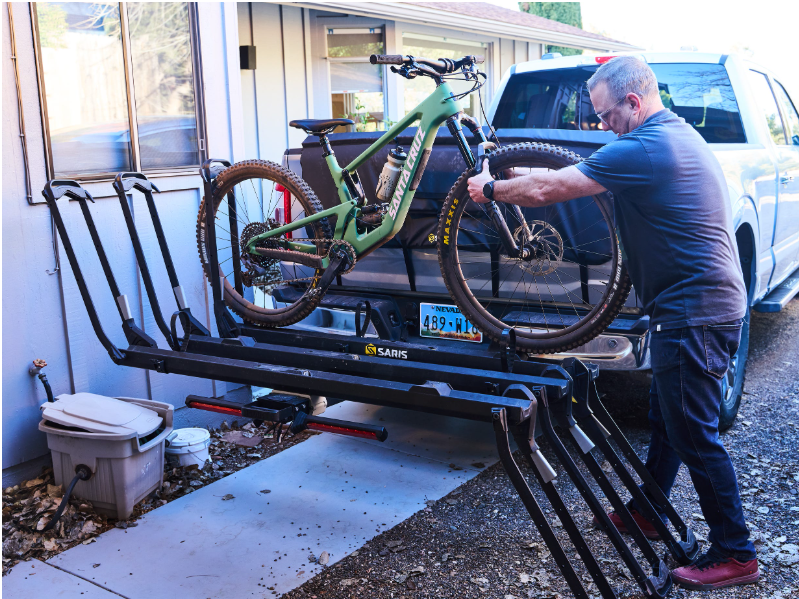
- Lightweight, Easy-to-Install Type
- Advantages: Lightweight, quick installation/removal, convenient for daily family use and temporary transport. Disadvantages: May be slightly less adaptable to higher-end models in terms of load capacity and wheel diameter.
- High Load Capacity/High Expandability Type
- Advantages: Suitable for multiple bicycles, heavier road bikes and mountain bikes, and some e-bikes; usually features early locking and overall vehicle protection design. Disadvantages: Heavier, more expensive, larger size.
- Expandable/Modular Type
- Advantages: Can expand the number of bikes it can carry by adding brackets and aftermarket parts, increasing flexibility. Disadvantages: Relatively higher assembly/adjustment complexity, higher maintenance requirements.
Purchase and Usage Recommendations
- Define Your Needs
Based on the number of family members, the types of vehicles you frequently use (road/mountain/electric), and whether you occasionally need to carry more than three bicycles, determine whether to choose a “basic two-bike + expandable” or “high-capacity fixed two-bike” solution.
- Check Vehicle Compatibility
Assess whether your vehicle has suitable trailer hitch joints, rear clearance, and trunk opening space. If the existing joints are too deep, you may need extension rods and anti-vibration clamps.
- Consider Weight and Installation Ease
For families that frequently need to assemble and disassemble, choosing a moderately heavy, easy-to-fold carrier will improve the daily user experience.
- Consider Security Features
Integrated locks, tire clamping strength, and anti-theft design should be clearly defined before purchase to avoid discovering deficiencies on-site.
- Maintenance and Care
After long-term use, bearings, hinges, locks, and other easily worn parts require regular cleaning and lubrication to prevent operational obstruction or malfunction due to dirt and debris accumulation.
Hitch bike racks are a popular choice for long-distance travel and daily commutes due to their stability and convenience. When purchasing, factors such as load capacity, bike interface, weight and folding ease, and safety features should be considered, along with a balance based on the actual usage environment. By comparing different models and understanding key testing points, you can find the rack that best suits your needs, achieving more efficient bicycle transport between long journeys and daily commutes.
Leave a Reply